

Braden Campbell
December 26, 2025
Justices Urged To Mull 9th Circ.'s Backing Of NLRB's 'Thryv'

5 min
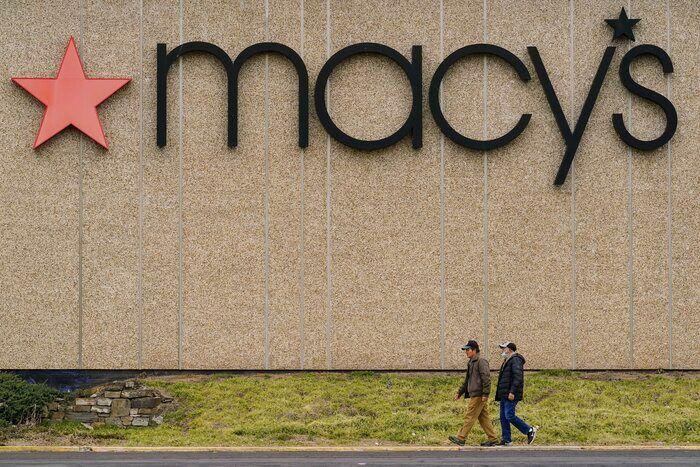
Image source: Unknown

AI-made summary
- Macy's has petitioned the U.S
- Supreme Court to review a Ninth Circuit decision that upheld a National Labor Relations Board (NLRB) order requiring the company to rehire striking workers and provide remedies for their losses
- Macy's argues the ruling conflicts with Supreme Court precedent and other circuit decisions, particularly regarding the scope of NLRB remedies and the definition of 'inherently destructive' employer actions
- The case is Macy's v
- NLRB before the Supreme Court.
The Ninth Circuit defied U.S. Supreme Court precedent and opened a circuit split when it upheld a National Labor Relations Board order making Macy's rehire striking workers and dole out novel remedies covering workers' losses, the company argued Wednesday in a bid for the high court's review.
Macy's argued that the Ninth Circuit defied U.S. Supreme Court precedent and opened a circuit split when it upheld a National Labor Relations Board order making it rehire striking workers and dole out novel remedies covering workers' losses. (AP Photo/Matt Rourke) Warning that the "stakes are high" on both issues, Macy's argued that the board "shattered [its] remedial limits" by claiming a new power to compensate workers for the "direct or foreseeable pecuniary harms" that follow labor violations and that the Ninth Circuit eroded a rule permitting employers without proven anti-union biases to take justified actions unless they're "inherently destructive" of workers' rights.
"Nothing about the decision below is consistent with this court's case law," Macy's argued. "It replaces delicate balancing with draconian employee-favoring rules and needlessly runs roughshod over employers' rights."
Macy's is challenging a split, amended opinion the Ninth Circuit issued in October affirming the NLRB's finding that Macy's violated the National Labor Relations Act by locking out strikers who had offered to return to work and blessing the board's use of so-called Thryv remedies
The board affirmed an agency judge's ruling that the lockout sabotaged contract talks with striking engineers represented by the International Union of Operating Engineers because the company did not immediately tie it to a counteroffer, even though it made one within a few days of refusing workers' return. And the board ordered Macy's to cough up payments covering costs workers have incurred because it refused to bring them back, following a practice it established in a 2022 ruling involving Thryv of making employers cover losses their violations cause, such as interest payments workers incur because they lose their paychecks.
The panel majority said Macy's denied the workers "a fair opportunity to evaluate any bargaining proposals for either lockout or reinstatement purposes" by not pairing the lockout with an offer. The majority also said Thryv remedies are not damages that the board is forbidden to award but "make-whole relief" like the back pay the NLRA explicitly empowers it to order.
The majority's holding on the merits of the lockout claims conflicts with Supreme Court precedent and other circuits' decisions applying it, and its holding on the remedies conflicts with the NLRA and rulings by the three other circuits that have opined on Thryv remedies to date, Macy's argued Wednesday.
Regarding the merits holding, Macy's pointed to the Supreme Court's 1967 ruling in NLRB v. Great Dane Trailers . In Great Dane, the court held that an action an employer has a legitimate business justification to take may violate the NLRA when it's "'inherently destructive' of important employee rights," even if there's "no proof of anti-union motivation."
Macy's argued the Supreme Court has provided guidance for discerning "inherently destructive" actions, placing a focus on "the effects of the employer's conduct on employees' collective-bargaining interests," and establishing that only "severe and long-lasting" effects cause inherent destruction.
"Most circuits have gotten the message loud and clear," including the Fifth, Seventh and Eleventh circuits, all of which look to the effects of alleged violations, Macy's argued Wednesday. The Ninth Circuit's ruling, which "never even once mentioned" the effects of the lockout on workers' rights, stands "in stark contrast," it said.
"The Ninth Circuit simply deemed the lockout inherently destructive because Macy's 'declared its lockout' one business day 'after the union gave its unconditional offer to return to work' and did not have a full and complete proposal on the table the moment it declared the lockout," the company said. "That conclusion is wrong and entirely ignores at least half the requisite inquiry."
And the court's ruling on the remedial issue created a circuit split that has only deepened in the month since it came down, Macy's said.
The Third Circuit was the first federal appeals court to weigh in on Thryv remedies, holding in a December 2024 ruling involving Starbucks that they exceed the board's powers. The Fifth Circuit joined the Third Circuit on this side of the split days after the Ninth Circuit issued its amended opinion, and the Sixth Circuit followed on Nov. 5.
"The Ninth Circuit is thus on the short end of a lopsided circuit split," Macy's argued. "This court should grant the petition and correct the Ninth Circuit's anomalous and dangerous ruling."
The union's attorney, David Rosenfeld of Weinberg Roger & Rosenfeld, told Law360 that the company's challenge to the Thryv remedy is a "dead issue" because the union is only seeking the reinstatement and back pay the board has traditionally ordered. He also said the lockout was inherently destructive "by its nature."
"There's no way of getting around the fact they told the 63 workers 'you can't come back to work,'" Rosenfeld said. "Even though later they put an offer on the table, in effect they fired them for a period of time."
Representatives of Macy's and the NLRB did not immediately respond Wednesday to requests for comment.
Macy's is represented by Paul Clement, Matthew Rowen and Kyle Eiswald of Clement & Murphy PLLC, and by Daniel Schudroff, Laura Pierson-Scheinberg, Dylan Carp and M. Christopher Moon of Jackson Lewis.
The NLRB was represented in-house by Usha Dheenan, Barbara Sheehy, William Cowen, Stephanie Cahn, Peter Sung Ohr, Ruth Burdick and Meredith Jason in the Ninth Circuit case. Attorney information for the Supreme Court case was not available Wednesday.
The case is Macy's v. NLRB, in the Supreme Court of the United States. The case number was not available Wednesday.
Article Author
Braden Campbell
 The Sponsor